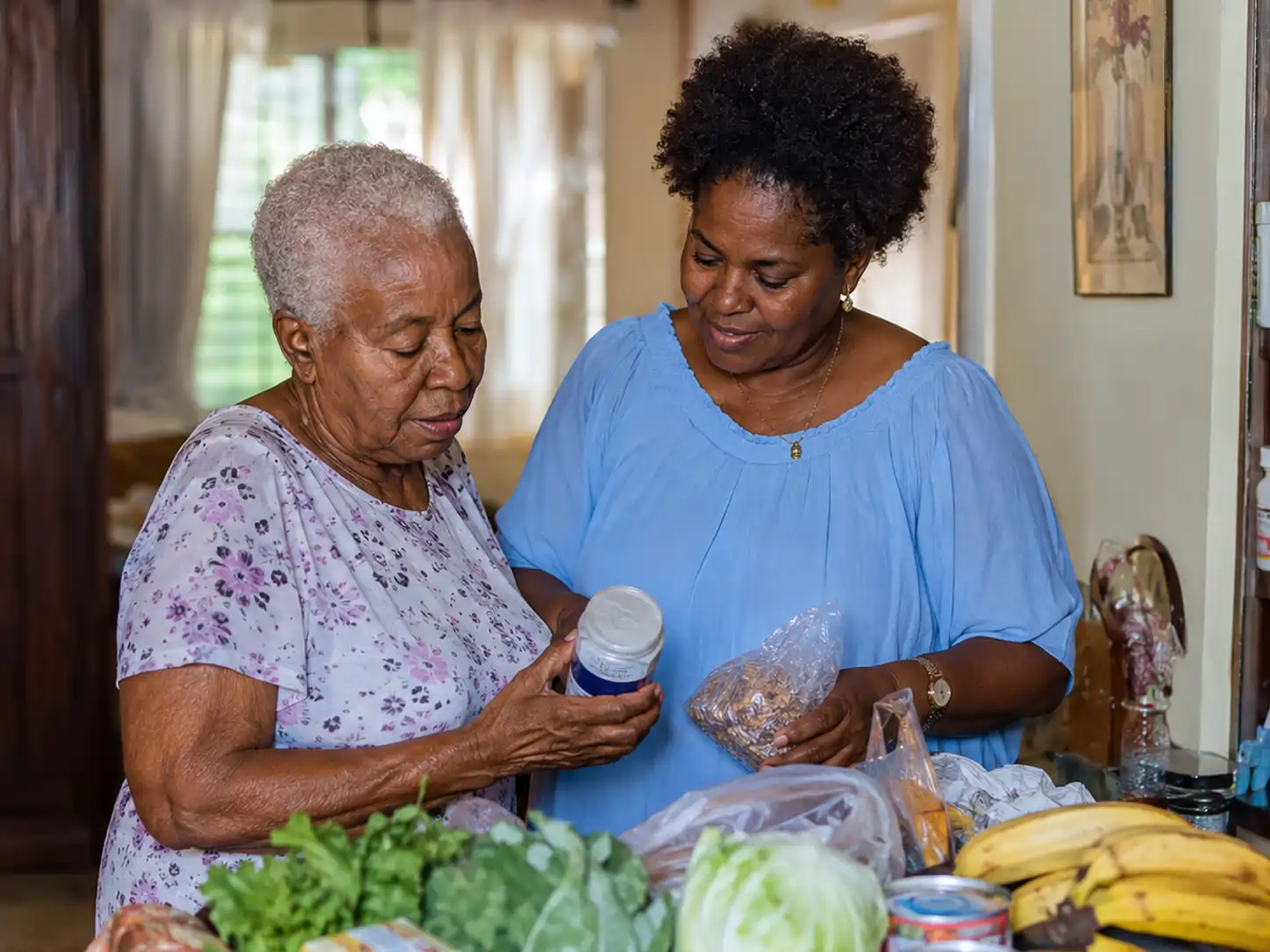
Agree on the purpose before the visit
A check-in is more useful when everyone knows what it is for. The visit might be primarily social, focused on groceries and household needs, or connected to a specific follow-up such as confirming that a delivery arrived.
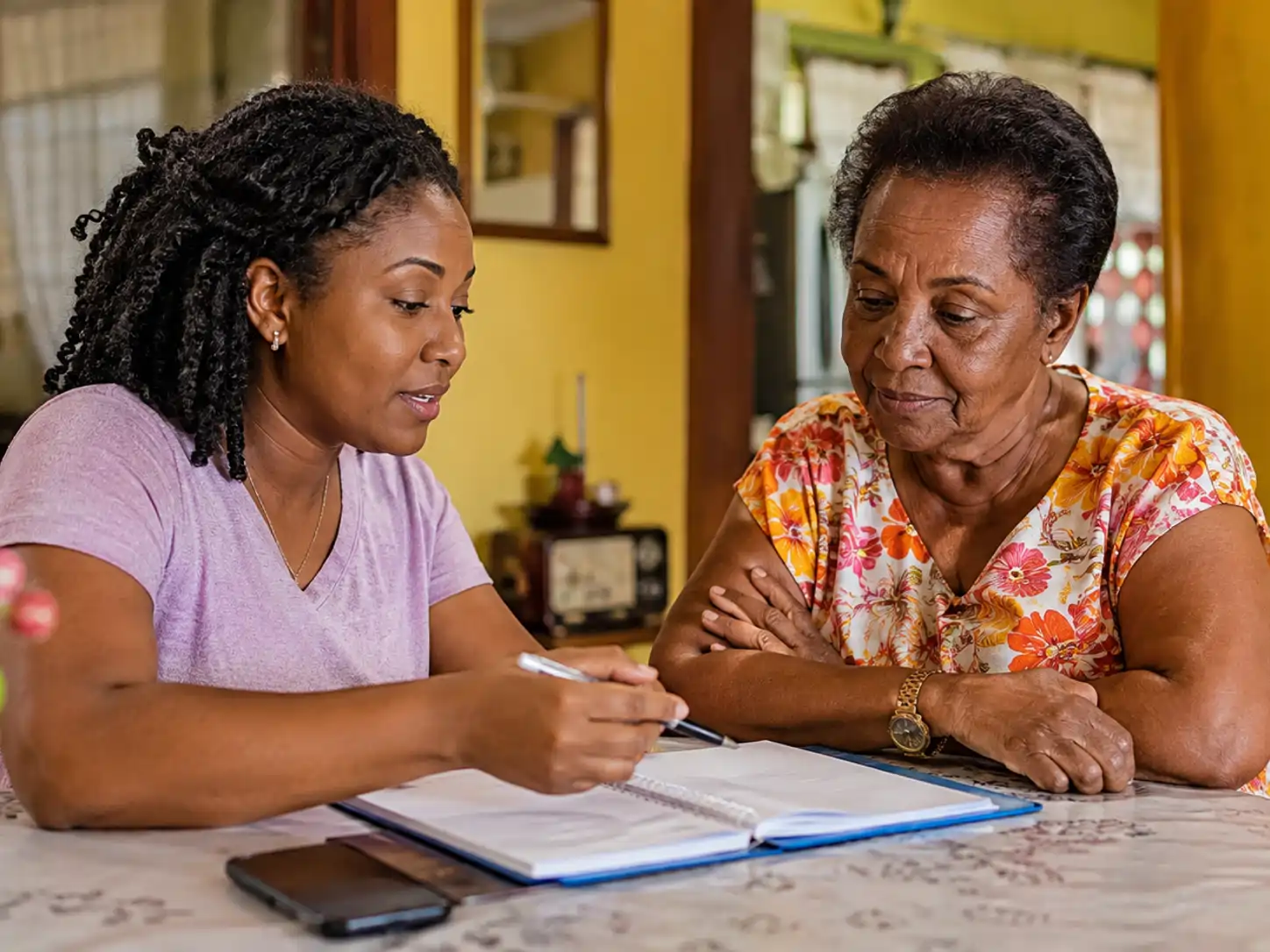
Write down the agreed scope so the visitor does not have to guess what family members expected.
Confirm everyday essentials
Depending on the agreed scope, practical observations can include whether basic groceries are available, whether an expected household service was completed, whether an upcoming appointment is still on the calendar and whether any approved errand needs follow-up.
The purpose is not to inspect someone’s life. It is to help with the specific everyday responsibilities that the older adult and family have chosen to share.
Keep the home and access plan current
Make sure the visitor knows how access is arranged and who should be contacted if plans change. Never assume a neighbour, helper or contractor has permission to enter the home. Authorization should be explicit.
If the visit involves receiving a service provider, confirm the company or person expected, the work authorized and whether any payment or receipt handling has been approved.
End with a concise update
After the visit, a practical summary is usually more useful than a long narrative. Confirm what was done, anything that could not be completed and the next action that needs a family decision.
If something appears to require medical or emergency attention, the correct response is to involve the appropriate service—not to turn the check-in into clinical care.
Where Family Bridge fits
Family Bridge Jamaica provides founder-led, non-medical family concierge, companion support and practical local coordination. We do not provide emergency response, nursing, hands-on personal care, clinical decision-making, legal representation or other regulated professional services. When a request requires another provider, the appropriate professional should be involved.
Frequently asked questions
Questions families often ask
How often should someone check in?
There is no universal schedule. Frequency should reflect the person’s preferences, independence, family circumstances and the practical purpose of the visits.
Can a check-in include errands?
Yes, when the errands are clearly authorized and fit within the agreed Family Bridge service scope.
Will Family Bridge make medical assessments during a visit?
No. Family Bridge check-ins are non-medical and do not replace clinical monitoring, nursing or emergency response.