
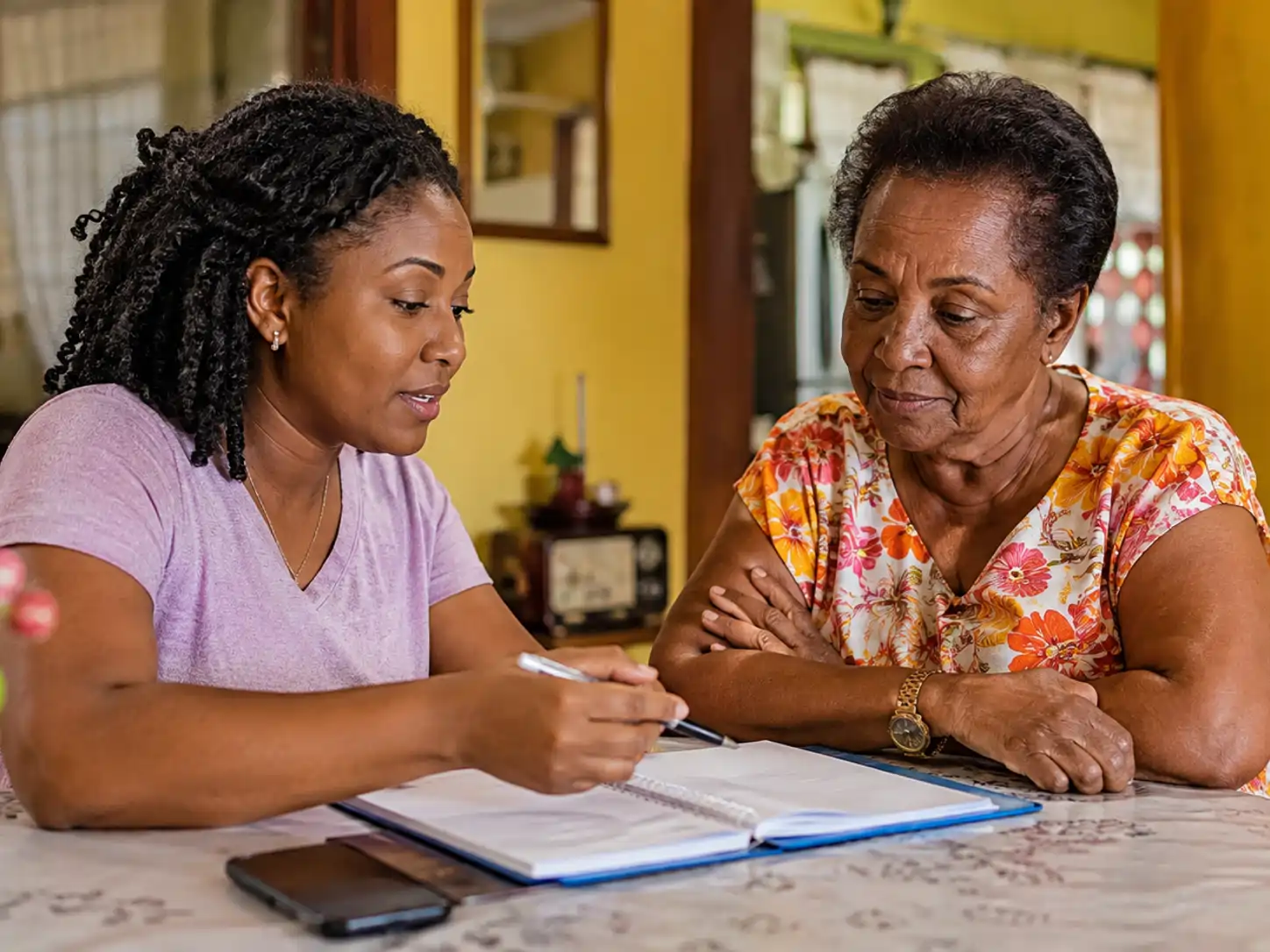
Map the everyday responsibilities
List the recurring things that keep life running smoothly: groceries, prescriptions, appointments, household repairs, transportation, bill-related administration and social routines. Identify which of those your parent handles comfortably and where occasional help would be useful.
This creates a realistic picture of support needs before stress or urgency changes the conversation.
Choose dependable local contacts
Record family, neighbours and service providers who are genuinely available—not simply people who once said “call me anytime.” Clarify what each person is willing and authorized to do.
For families overseas, having one dependable local coordinator can reduce the burden of asking different relatives to solve every practical problem.
Document permissions and boundaries
Write down who can enter the home, collect items, receive service providers, make approved purchases or communicate with family. Set financial limits and avoid unrestricted access to accounts or credentials.
Also define the boundaries: a practical support plan is not a substitute for emergency response, medical care, legal representation or other regulated services.
Keep emergency information separate and current
Maintain emergency contacts, medical provider information and other critical details in a location the appropriate family members can access. Emergency planning should identify which services to call rather than expecting a routine concierge provider to act as an emergency responder.
Review contact information periodically, especially after a move, new provider or family change.
Review the plan together
A support plan should evolve with the person’s preferences and circumstances. Revisit it after a significant change and at reasonable intervals even when everything is going well.
Planning early allows the older adult to shape the support around their own priorities rather than having decisions made hurriedly during a crisis.
Where Family Bridge fits
Family Bridge Jamaica provides founder-led, non-medical family concierge, companion support and practical local coordination. We do not provide emergency response, nursing, hands-on personal care, clinical decision-making, legal representation or other regulated professional services. When a request requires another provider, the appropriate professional should be involved.
Frequently asked questions
Questions families often ask
When should we create a support plan?
Ideally while the parent is independent and able to participate fully in deciding what kind of help they want.
Does a support plan mean my parent needs ongoing care?
No. It can simply document who handles occasional practical tasks and what to do when something changes.
Can Family Bridge be part of the local plan?
Yes, for suitable non-medical concierge, companion and coordination services within the accepted scope and service area.